He Was a Cattle Herder With No Cattle. Then SSLCD Gave Him Something to Wake Up For.
STORIES OF RESILIENCE | SSLCD COMMUNITY VOICES
In South Sudan, a man without cattle is a man without standing. When Bul Deng fled to Olua 1 settlement in Adjumani, Uganda, he left his herd behind and something inside him went quiet. What brought him back to life was not what he expected.
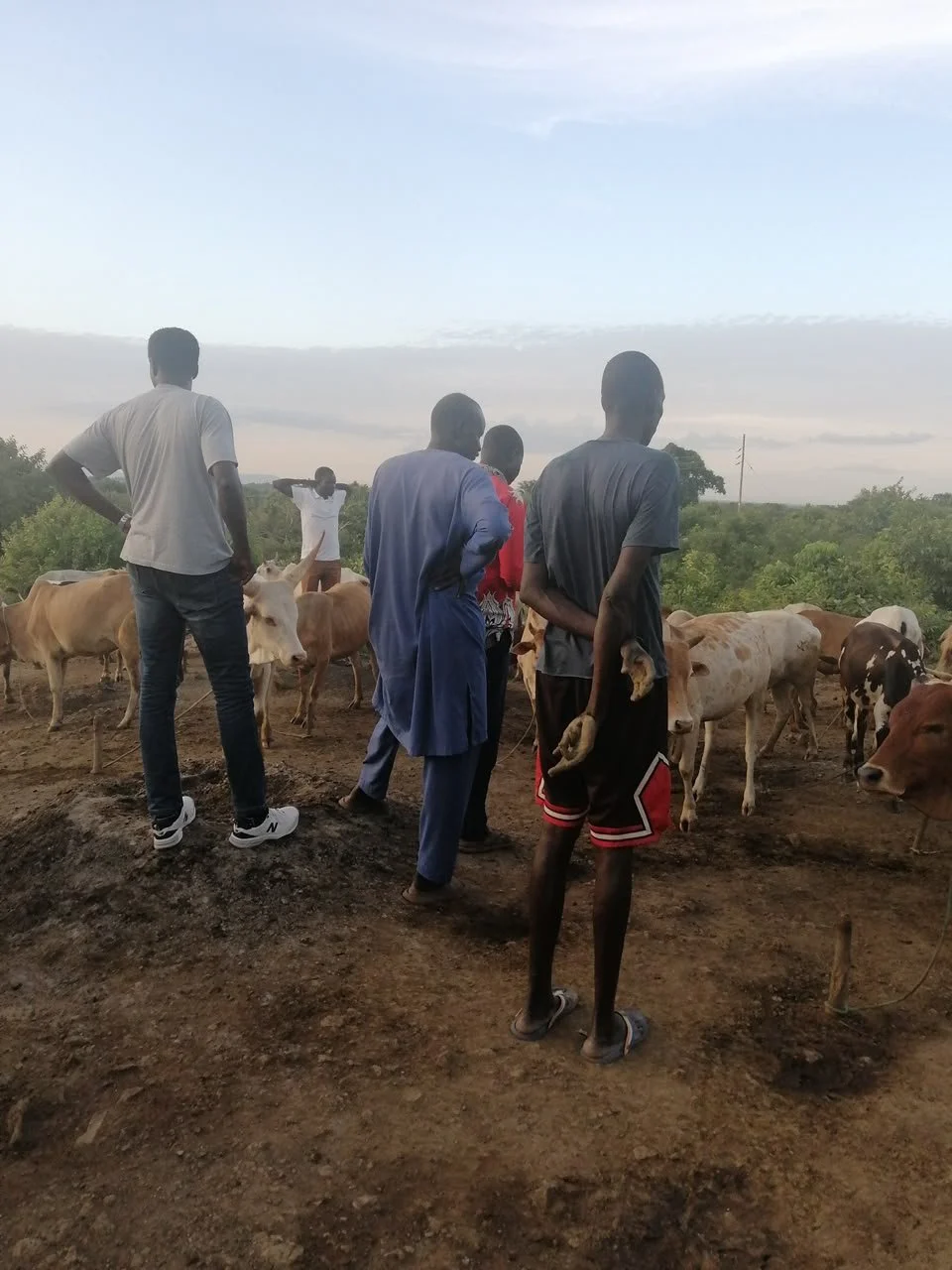
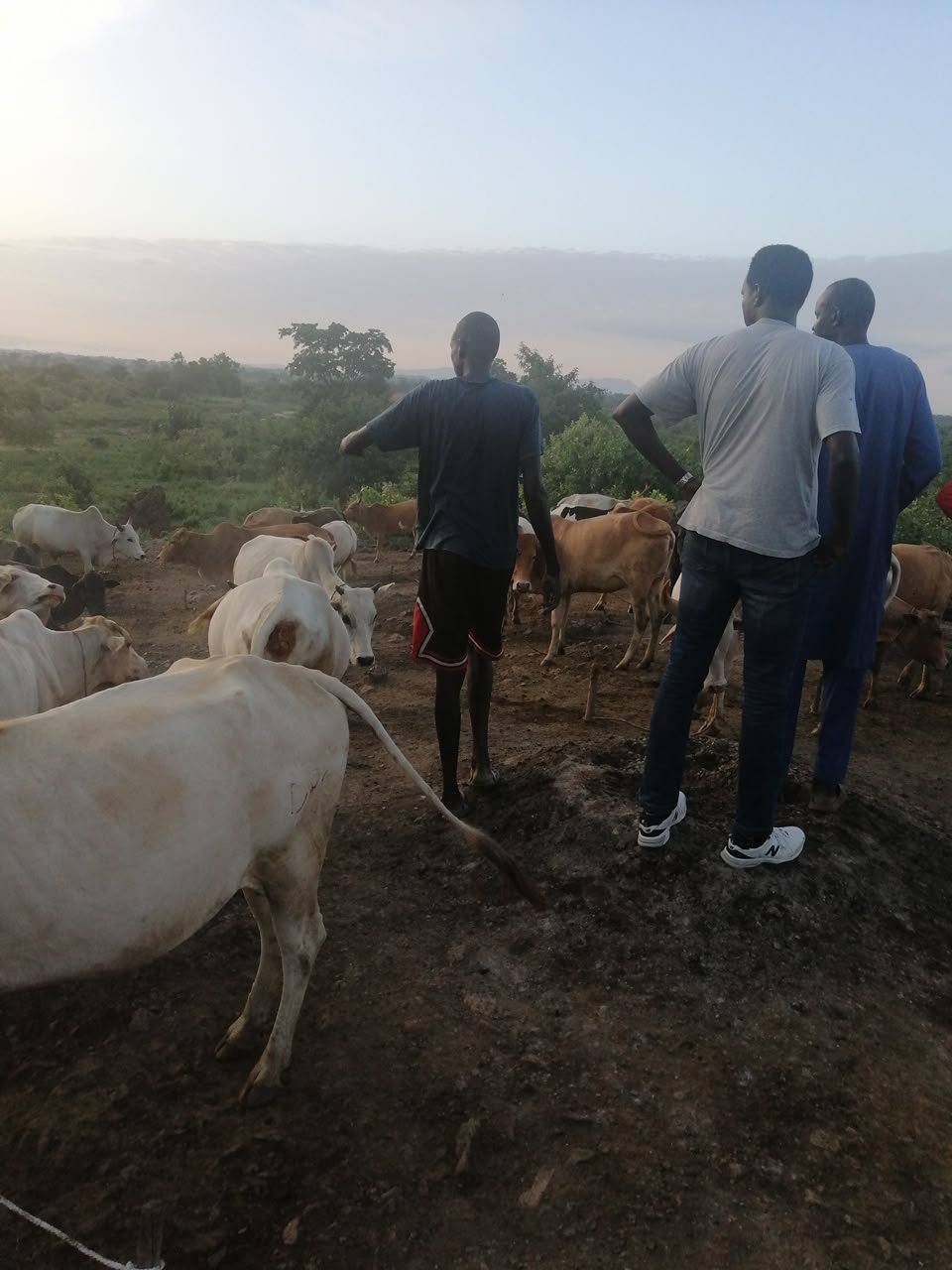
Bul and Co looking for a bull to slaughter for the community on the Market day of Olua (Gonyila Village near Olua 1 Refugee Settlement)
There is a particular kind of shame that has no name in English.
In Dinka, you feel it when you wake up in the morning and have nothing to do. Nothing to tend. No animals calling you out of sleep before the sun rises. No reason your hands are needed in the world. Bul Deng felt that shame every morning for two years in Olua 1 settlement.
He did not talk about it. Men like Bul do not talk about things like that. But everyone around him could see it. The way he sat. The way he answered questions with short words. The way he had stopped being the person he was before the war took everything and dropped him on the other side of a border with nothing but his name.
A Man Without Cattle
To understand what the Men's Action Group gave Bul, you first have to understand what he lost.
In South Sudan, cattle are not simply animals. They are the architecture of a man's life. They tell his community what he is worth. They are how he marries, how he mourns, how he celebrates, how he proves he is someone who matters. Bul had spent his entire adult life as a cattle herder. He knew the animals by their markings, by their sounds, by the particular way each one moved. His hands knew the weight of a rope and the warmth of a flank. He was good at something that mattered deeply.
Then the war came and scattered everything.
In Olua 1, there were no cattle. There was nowhere to herd. The skills that had defined him for thirty years, the knowledge that lived in his hands and his instincts and his early mornings, had nowhere to go. He was not lazy. He was not broken. He was simply a man whose entire identity had been built around something that no longer existed in his world.
“I used to wake up and just sit,” he says. “In South Sudan I was always moving. Always doing. Here I would sit and the day would pass and I had done nothing. That feeling is very hard to carry.”
“I used to wake up and just sit. In South Sudan I was always moving. Always doing. Here the day would pass and I had done nothing. That feeling is very hard to carry.”
The Men's Action Group
SSLCD understood something that many organizations miss. A man who cannot provide does not just suffer economically. He suffers in his soul. He withdraws from his wife. He becomes quiet in ways that are not peace. He stops being present even when he is sitting right there.
So they did something simple and profound.
They started a cattle co-operative.
They called it the Men's Action Group, and the name was chosen carefully. Not Men's Waiting Group. Not Men's Surviving Group. Action. Because what these men needed more than anything was to act. To be useful. To have something depend on them again.
When Bul first heard about it, he did not believe it was real. Cattle, here, in a settlement? He came to the meeting with his arms crossed and his expectations low. He had learned, in two years of refugee life, not to hope too quickly.
Then he saw the animals.
“When I saw those cows,” he says, and something shifts in his face, “something woke up in me. Something I thought was finished.”
The Mornings Changed
He joins the other men before sunrise now. That detail matters more than it might seem. Before the Men's Action Group, mornings were the hardest part of the day. The long empty hours before the settlement stirred, when a man could sit with all he had lost and no way to fill his hands.
Now his hands are full.
He tends the animals alongside the other men in the co-operative. Men who came from the same world he came from, who lost the same things he lost, who understand without needing to explain what it means to have cattle again. They do not talk much while they work. They do not need to. The work itself is the conversation.
“These men, we know each other,” Bul says. “We came from the same life. When we are together with the animals, it is like a small piece of home came back.”
His wife noticed first. She told him he was talking more at dinner. That he was laughing at things again. That his children had started following him in the evenings the way children follow a father who is present, a father whose spirit is in the room with them.
He had not realized how far away he had gone until she told him how much closer he had come.
“My wife told me I was laughing again. I had not noticed I had stopped.”
More Than Cattle
The Men's Action Group gave Bul back more than a livelihood. It gave him back his mornings. His sense of purpose. His place in his family and his community. The knowledge that his hands, the hands that had tended cattle his whole life, still had work to do in this world.
He is not the man he was before the war. Nobody who has been through what he has been through comes out the same on the other side. But he is a man who gets up before sunrise now. A man whose children run to him when he comes home. A man who laughs at dinner.
“I do not know when we will go back to South Sudan,” he says, looking at the animals in the late afternoon light. “Maybe soon. Maybe not soon. But right now, here, today, I have something to do. I have something that needs me.”
He pauses.
“That is enough. For now, that is everything.”
“I have something that needs me. That is enough. For now, that is everything.”
There are many men like Bul in the settlements of Olua 1 and Mungula. Men who arrived with nothing and are rebuilding not just their livelihoods but their sense of who they are. SSLCD’s Men’s Action Group walks with them in that rebuilding, one morning at a time.
Not in front of them. Not behind them. Beside them.
You can be beside him too.
Donate at hopeforsouthsudan.com